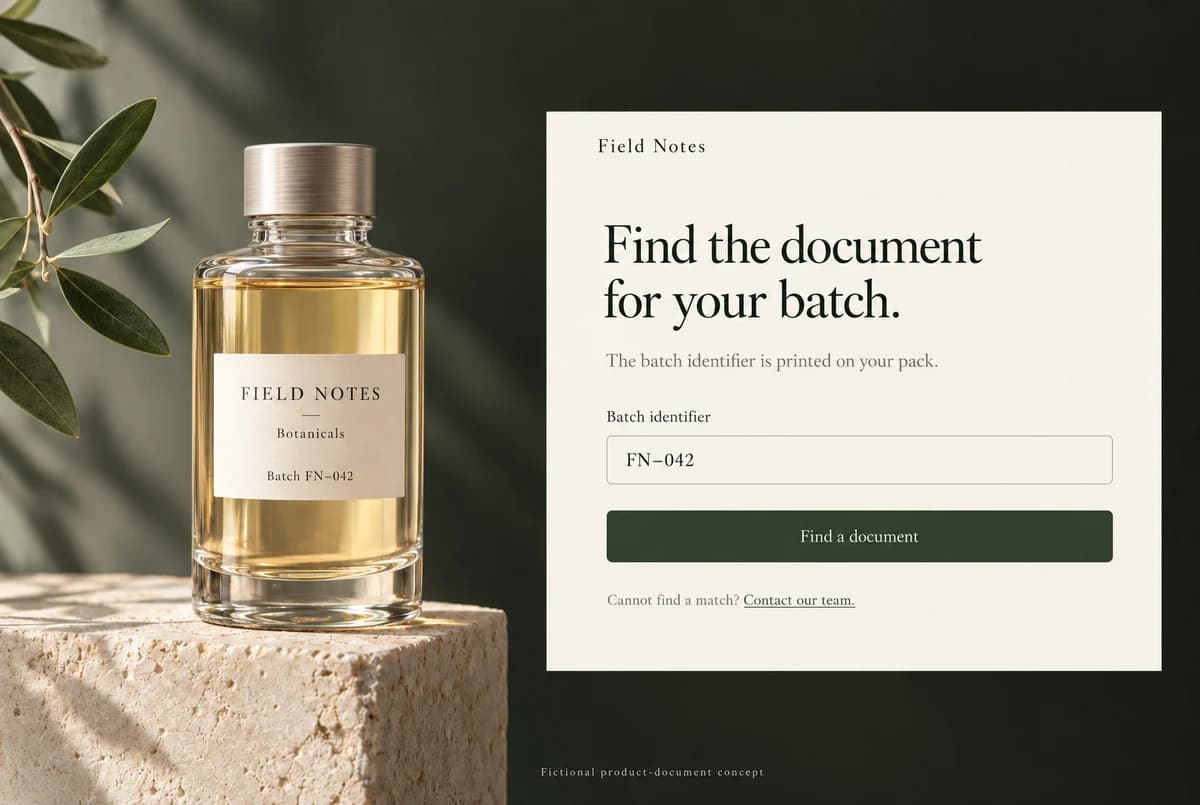
The bottle is beautifully lit. A leaf casts a tasteful shadow. Somewhere in the distance, a brand is finding its balance.
The buyer is still trying to work out what is in the bottle.
A CBD store can have all the atmosphere in the world and still leave the practical questions unanswered. What exactly am I buying? How much arrives? Where is the report for this product? Do you ship to me?
Answer those well and the design has something useful to do.
Give the product an identity before giving it a mood
“Find your balance” could sell a yoga class, a savings account or a chair. It does very little to identify a product.
Lead with the name, format, pack contents and ingredients. Make quantities and units easy to read. If the page gives both a total amount and a per-unit amount, explain which is which.
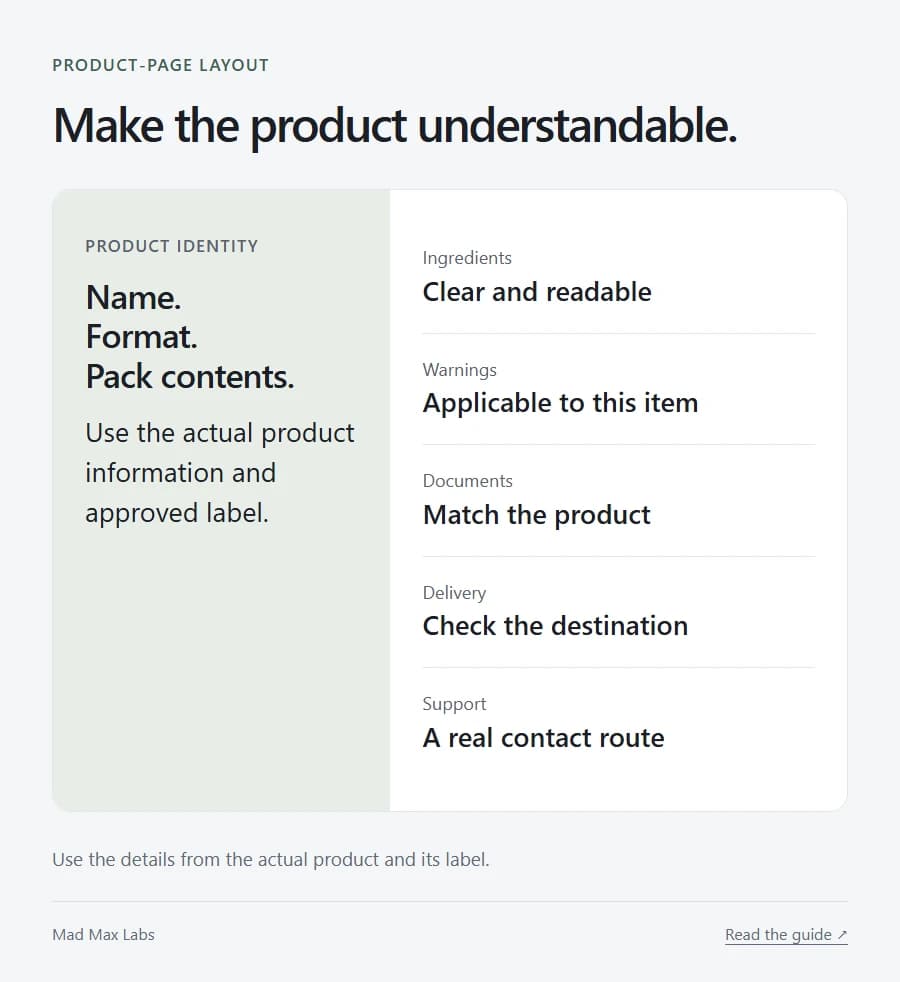
The label, page and supporting documents should agree. A buyer should not have to choose which version to believe.
Photography can help here. Show the actual package. Let people read the label. Add a view that makes the size clear. Keep the beautiful opener, then give the next image a practical job.
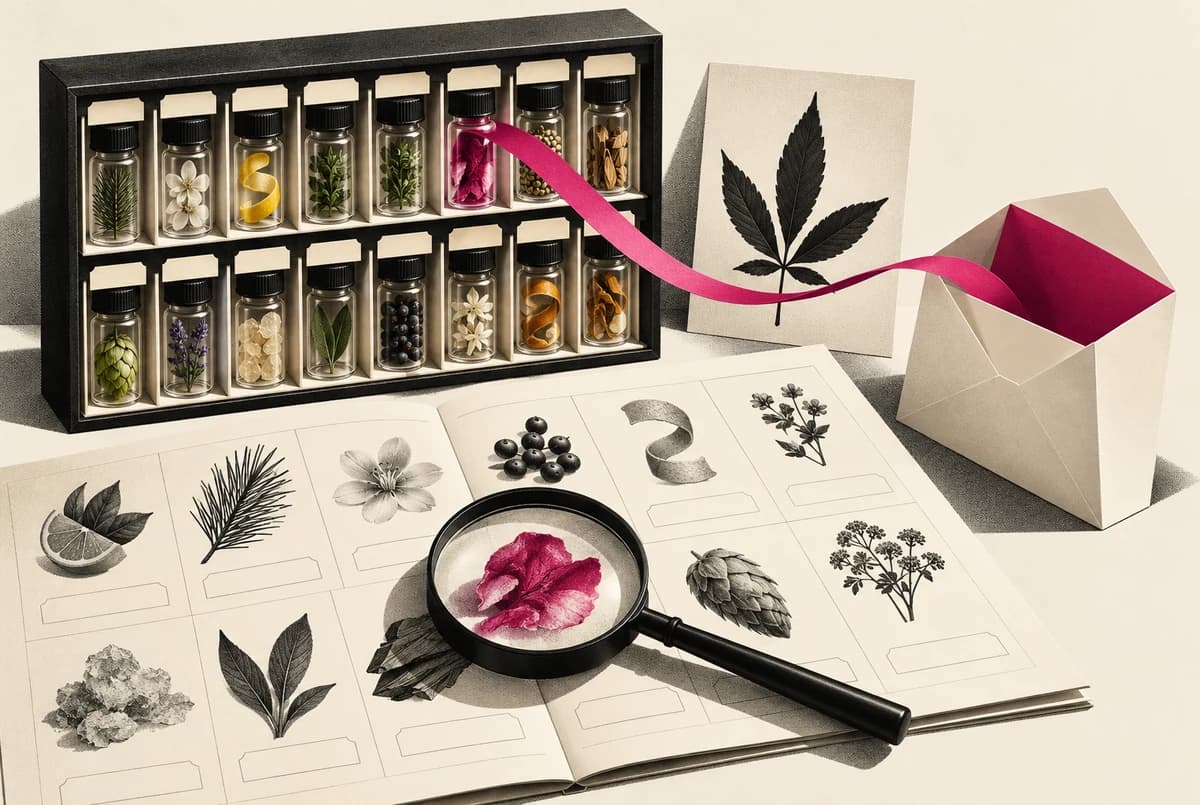
I also want terpene visuals to feel clean and contemporary. Clear glass and visible pale-gold liquid suit that direction far better than an amber apothecary bottle. The Field Notes concept above explores that look; actual product photography should show what the customer receives.
Let people shop with what they know
Our Terplandia work is for a B2B terpene manufacturer. Its customers bring specific catalogue questions, which is where a useful finder earns its place.
On the strain finder, buyers can narrow the catalogue by type and dominant terpene.
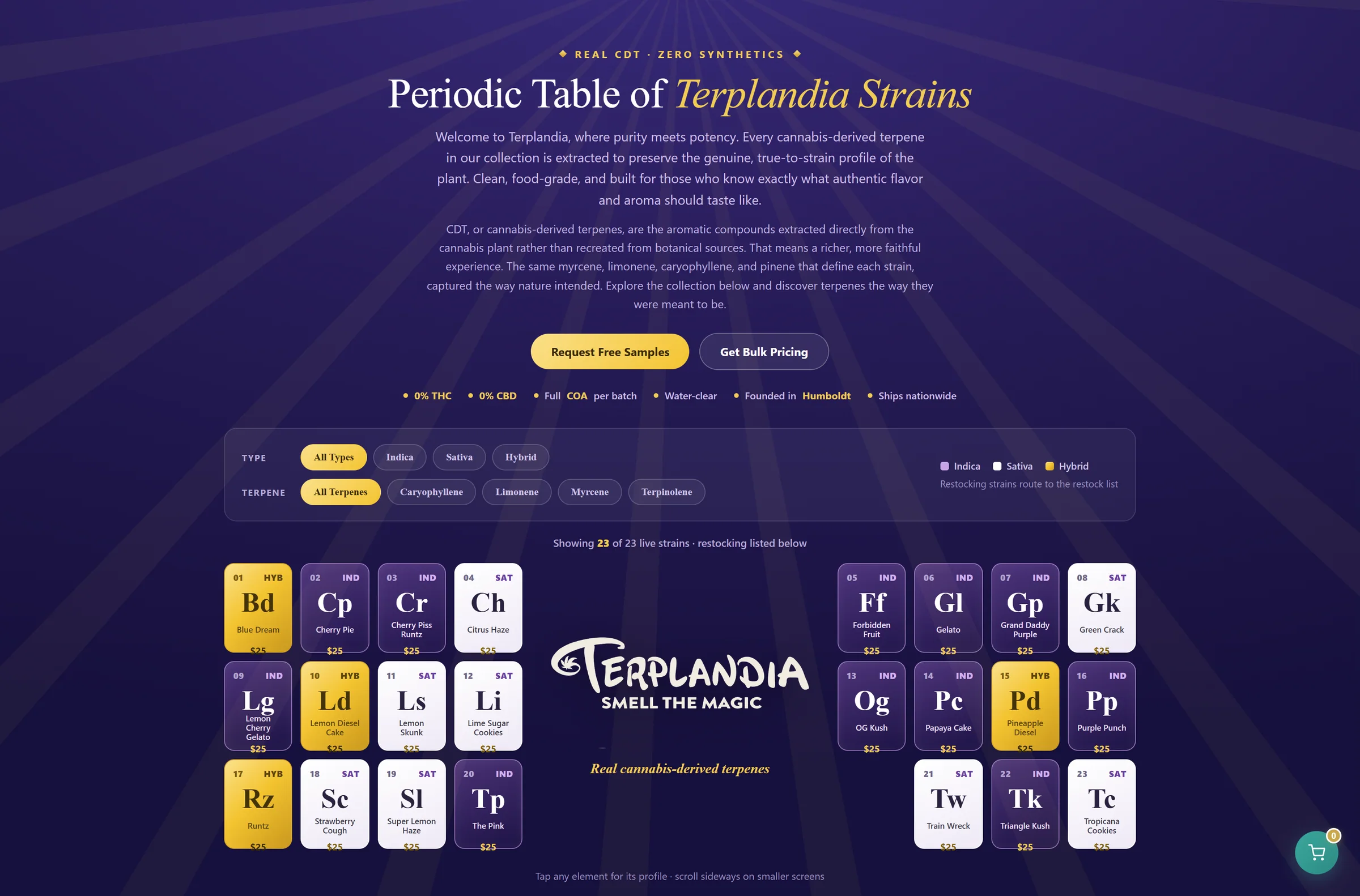
Those filters give a knowledgeable customer a way to move. They also leave the catalogue visible to someone still browsing.
For another store, the useful choices might be format, pack size or availability. Choose labels the buyer understands. A filter panel with twenty options can look impressively thorough while leaving someone less sure where to start.
Try the return trip on mobile, too. Open a product, inspect it and go back. Are the previous selections still understandable? Can the person continue comparing without starting over?
Put the paperwork beside the decision
Terplandia’s Blue Dream page brings specifications, sample ordering, lab-result links and a safety data sheet close to the purchase controls.
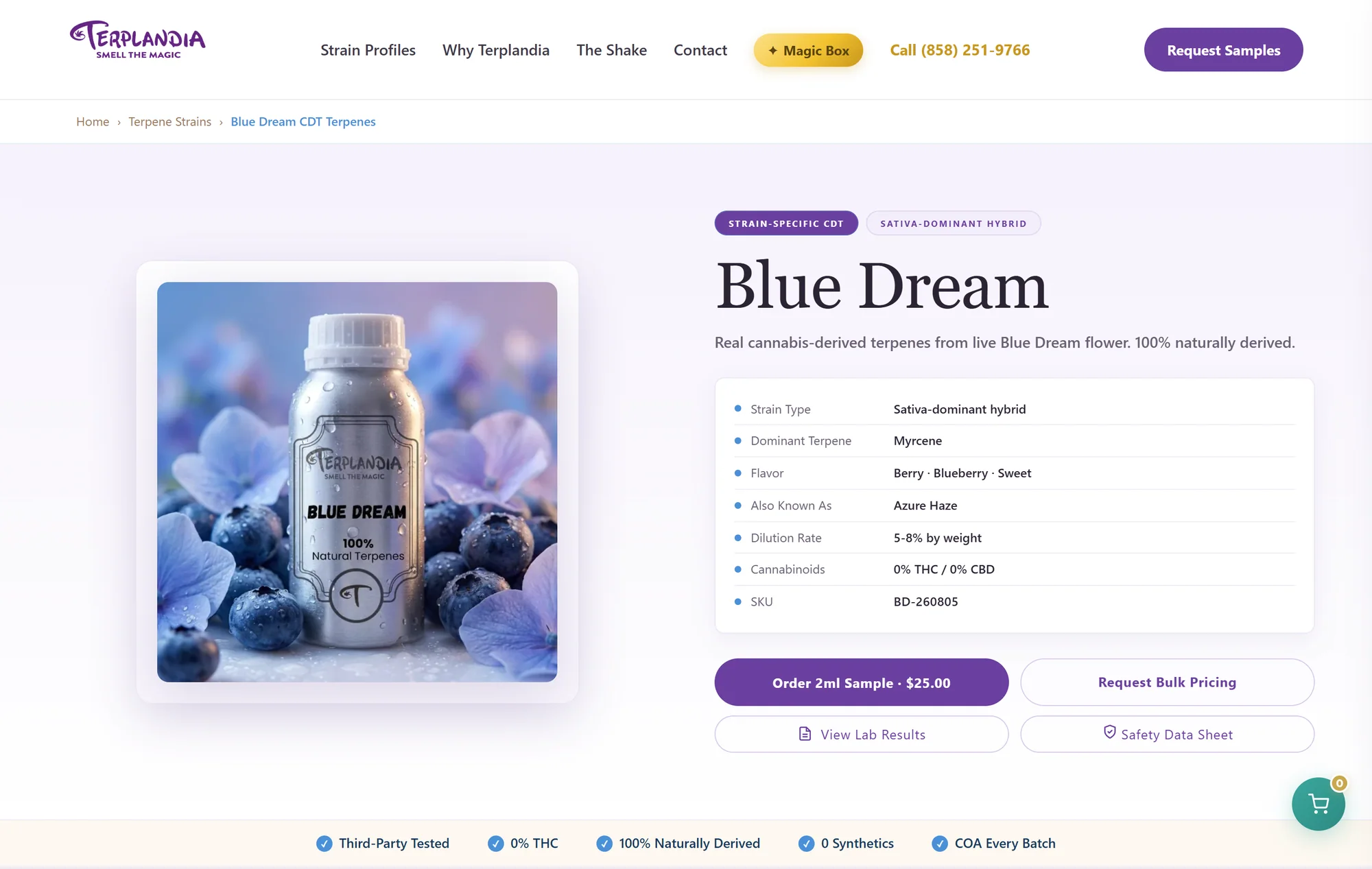
That placement matters. The buyer gets to stay with the item they are considering.
For products with batch-specific reports, carry that same clarity through the document lookup. Show where to find the batch identifier. Match it to the right record. Give the report a date and make older records easy to recognise.
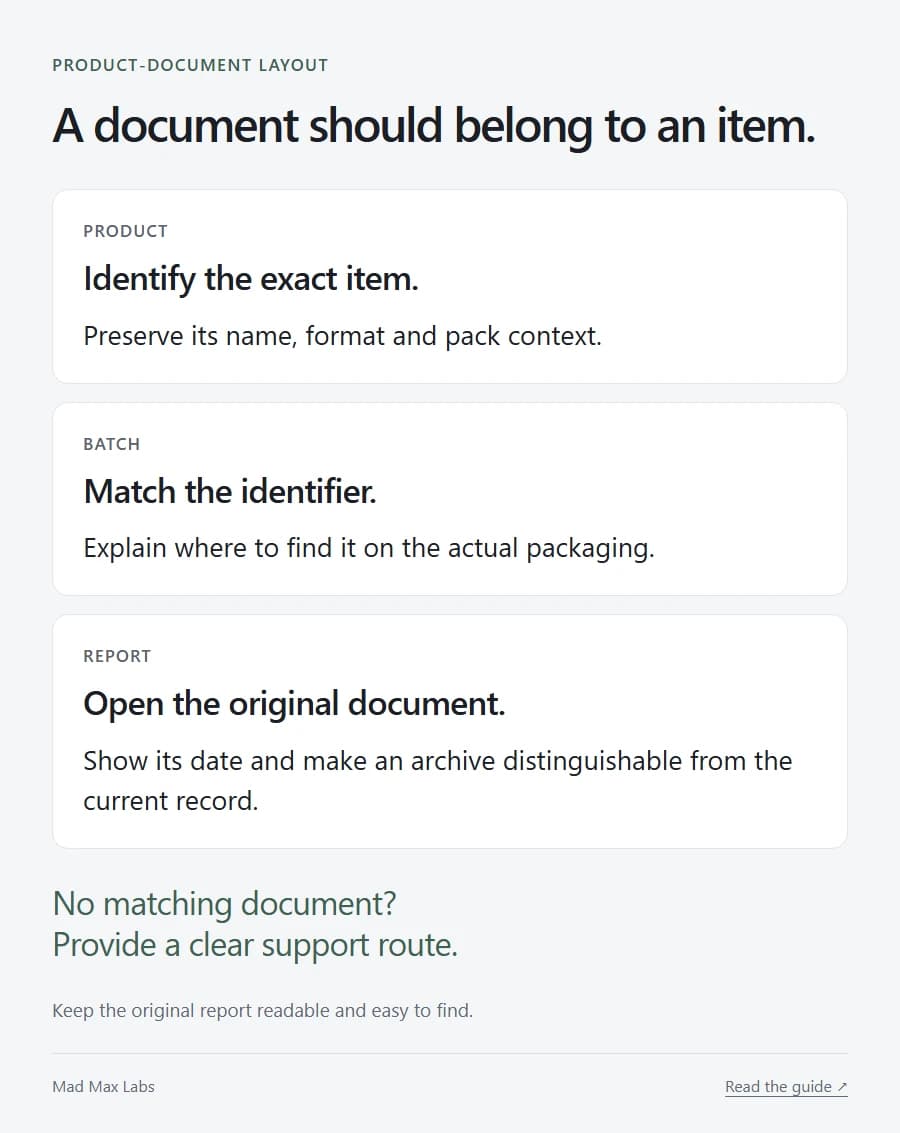
A “lab tested” badge is a claim. A matching, readable report gives the customer something to inspect.
Open the document on a phone. Can you read it? Can you return to the product? If you offer a summary, keep the original available as well.
Keep medical promises out of the decoration
The FDA has warned sellers about unsupported therapeutic claims for CBD. A testimonial, icon or headline can make a claim just as readily as body copy. Get the actual products, markets and claims reviewed by qualified counsel; a lab report or disclaimer does not grant permission to sell.
Then get back to explaining the product accurately. There is plenty to say without borrowing a promise you cannot support.
Explain delivery while the buyer still has a choice
Show where you deliver, how shipping is calculated and what the dispatch window means. If eligibility depends on the product and destination, the store needs to check that combination.
“Ships everywhere” is an expensive sentence when it turns out to be enthusiasm rather than fact.
Put returns, damaged-order information and contact details somewhere obvious. A support link should reach a person or a clearly explained service, with a realistic idea of what happens next.
This is where the store starts to feel like a business you can deal with. Clear information, a sensible route through it and someone available when the answer is missing.
The Terplandia case study shows more of that work. The CBD email guide takes the same approach to the messages people receive afterwards.
Keep the handsome bottle. Give the buyer the rest of the picture.