I used to be a big fan of Claude’s Opus models for SEO and app development.
These days, I would put my money on ChatGPT.
For the work I’m doing, it feels like more intelligence for a lower monthly cost than Claude. I’ve also had several usage resets, which makes the subscription feel considerably more generous when I’m in the middle of building something.
I have no interest in remaining loyal to a subscription out of politeness. The tool has to keep earning the bill.
Why I’ve changed my mind about the value
When you work solo, a subscription competes with every other thing the business needs. A model can be impressive and still feel expensive for the amount of useful work you get from it.
That makes usable access part of the purchase. The cleverest answer in the world is less exciting when you spend the rest of the afternoon waiting to ask the next question.
Check the current access when you buy. The resets I’ve had are a welcome bonus.
And I’d happily change my mind again. These companies can compete for the renewal.
Where that leaves Claude and Gemini
Claude is still worth trying on the work you actually do. My earlier enthusiasm for Opus came from using it for SEO and app development; a change in my spending preference does not erase that.
Give it the awkward assignment. The article that needs a point of view. The app change with several things to keep straight. See how much of the result you would keep and how much you would have to repair.
Gemini deserves a different first question: what access do you already have?
If your business runs in Gmail, Docs and Meet, check your Workspace edition. Google includes Gemini features in its business plans, with broader in-app access in Standard than Starter. You may have something useful sitting inside software you already pay for. Google Workspace’s pricing page shows the current bundles.
I would look there before collecting another subscription.
Keep the team bill separate from the solo verdict
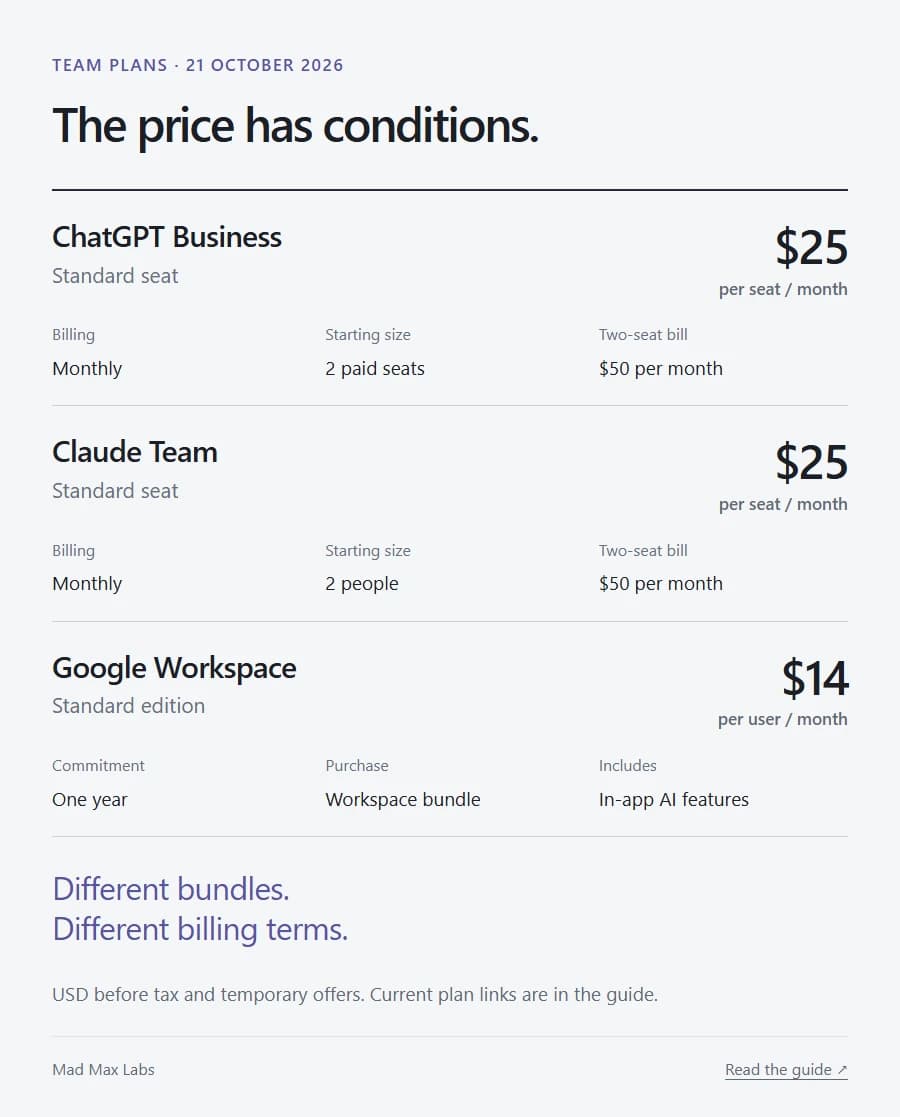
Buying for staff changes the bill. ChatGPT Business and Claude Team currently have the same entry seat price; here’s what the team accounts cost.
As checked on 21 October 2026:
- ChatGPT Business Standard is $25 per person on monthly billing, or $20 per month billed annually. It requires at least two paid seats.
- Claude Team Standard is also $25 per person on monthly billing, or $20 annually, starting at two people.
- Google Workspace Standard lists $14 per user per month with a one-year commitment, before tax and temporary offers.
For either of those two-seat AI workspaces, the monthly-billed starting total is $50. Workspace is a different bundle with a different commitment.
If you’re buying for yourself, compare the individual plans. If you’re buying for staff, decide who controls the accounts, billing and shared work. Check the data terms for that exact plan before putting confidential material into it.
A price printed beside a familiar logo is only part of the bill.
Try something ordinary enough to catch it bluffing
An impressive demo is easy to enjoy. A small task with a known answer is easier to judge.
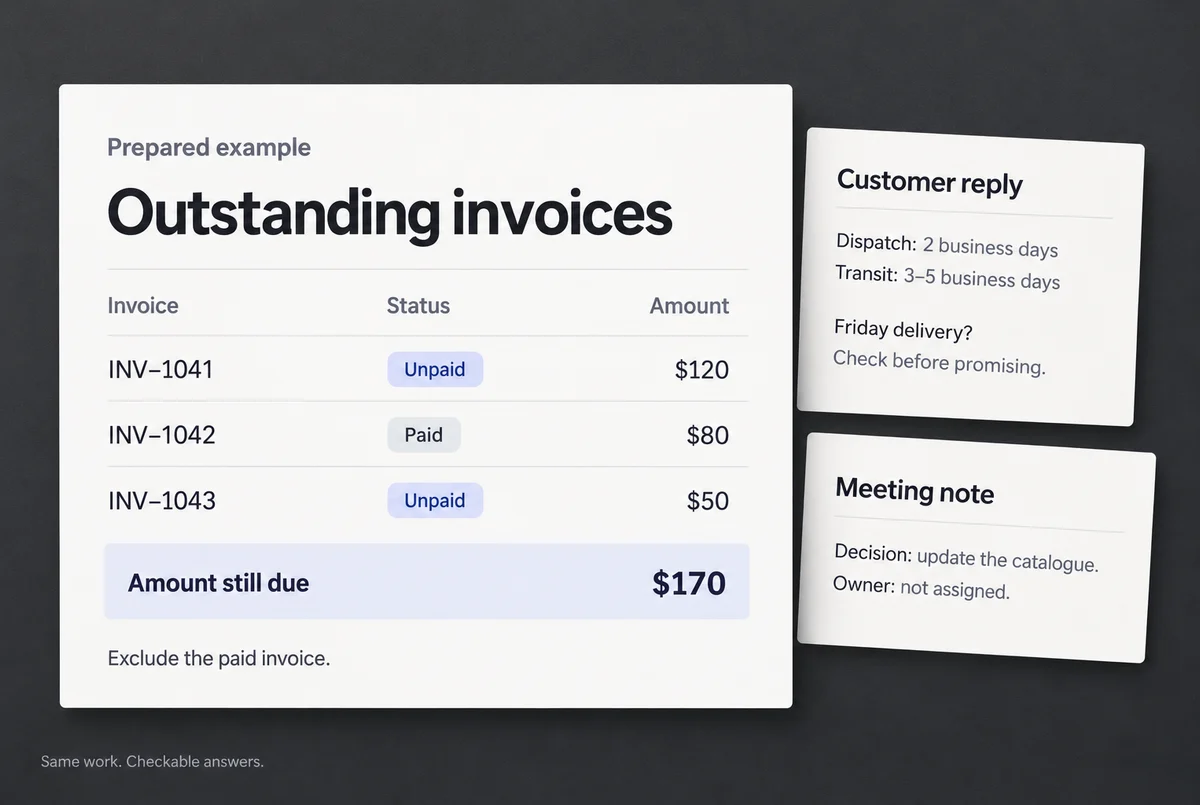
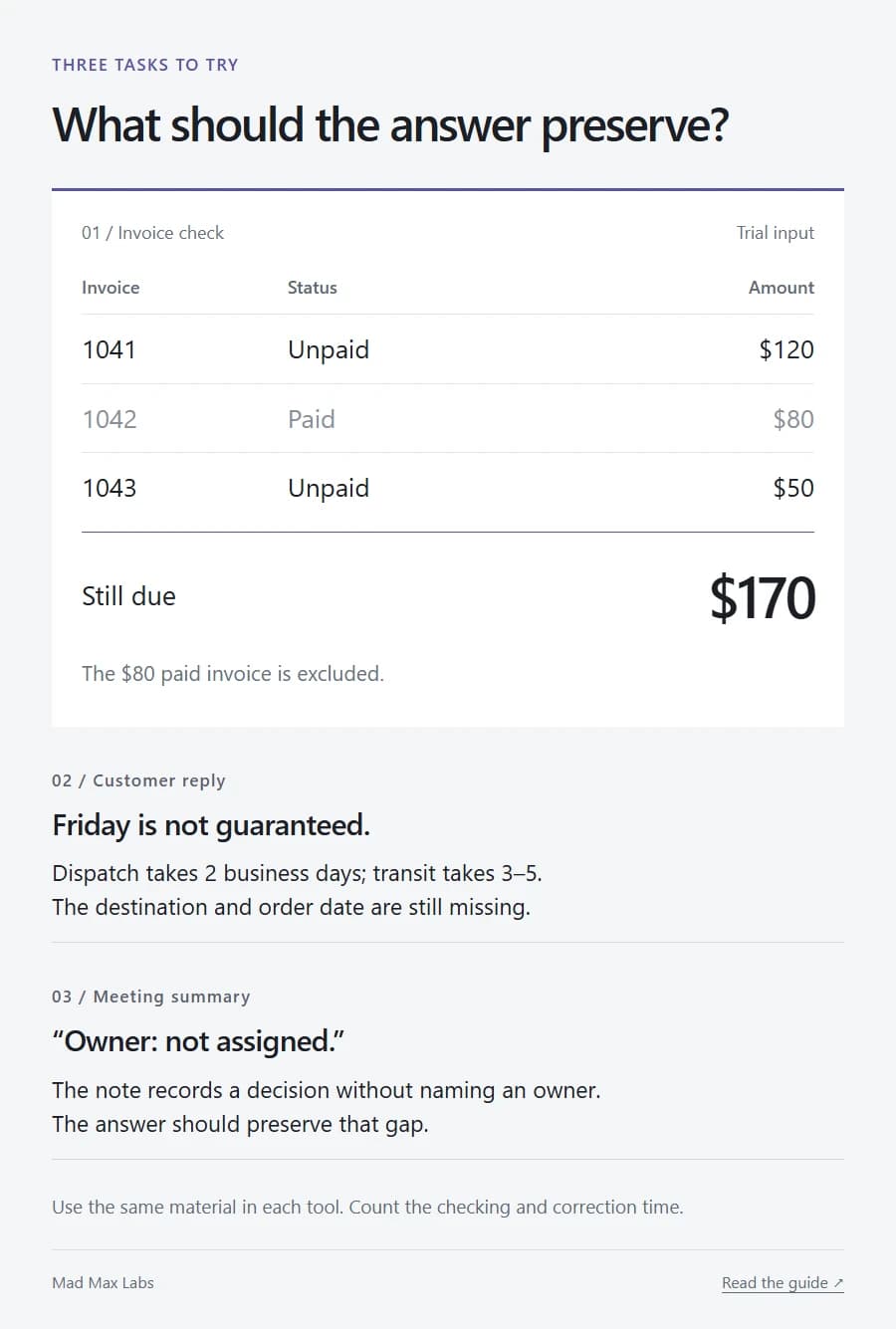
Give each candidate three invoices: $120 unpaid, $80 paid and $50 unpaid. Ask what is still owed. The answer is $170. Including the paid invoice makes it $250 and wrong, regardless of how elegantly the response is formatted.
Then ask for a delivery reply. Dispatch takes two business days; transit takes another three to five. The customer wants Friday. The destination and order date are missing. A confident guarantee is a bad answer.
Finally, try a meeting note with a decision but no assigned owner. Watch whether the tool admits the gap or promotes somebody without asking.
These are starter exercises. Move on to a real task you can check: a product description built from supplied facts, a spreadsheet you understand or a small app change you can test.
Use the same material for each tool. Count the editing and checking time. The first answer may take seconds; getting it into a state you can use is the part that affects your day.
Pick the one you keep finishing work with
Open the file it made. Follow the source links. Try the result in the place you need to use it.
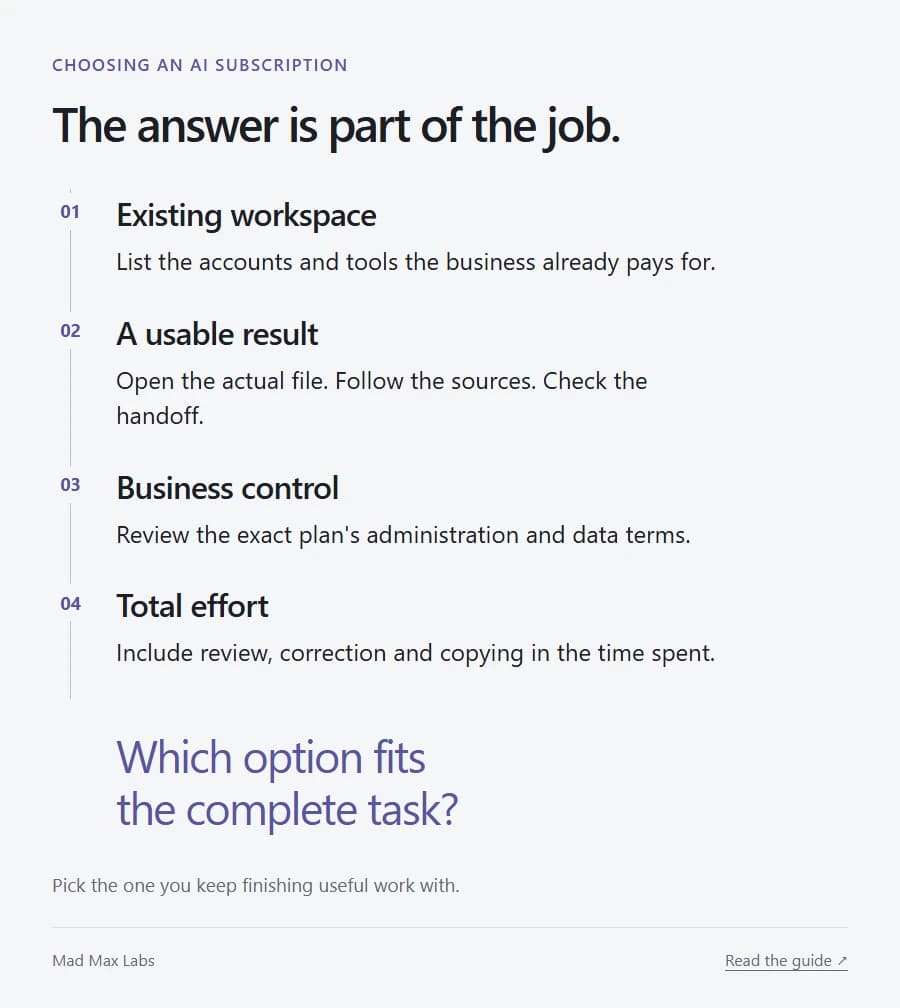
A second subscription can be worth keeping when it does a job the first one handles badly. “Everyone online says I need both” is a less convincing line item.
My current choice is ChatGPT. Yours should survive a week of your own work.
If you already have access and still find yourself staring at an empty chat box, the next purchase might be practical training. Paying for a more powerful tool doesn’t automatically make it useful on Monday morning.