The workshop was excellent. Everyone nodded. Someone said “game changer.” You left with eighty prompts and a PDF.
On Monday, a customer asked a question that wasn’t in the demo. Now the PDF is open, the customer is waiting and you’re wondering what exactly you bought.
That is the problem with AI training built around a performance. The trainer can do impressive things. Wonderful. Can you?
For a small business, the purchase earns its keep when someone can finish useful work after the trainer has gone home.
Start with the awkward customer question
“Will the blue mug arrive by Friday?”
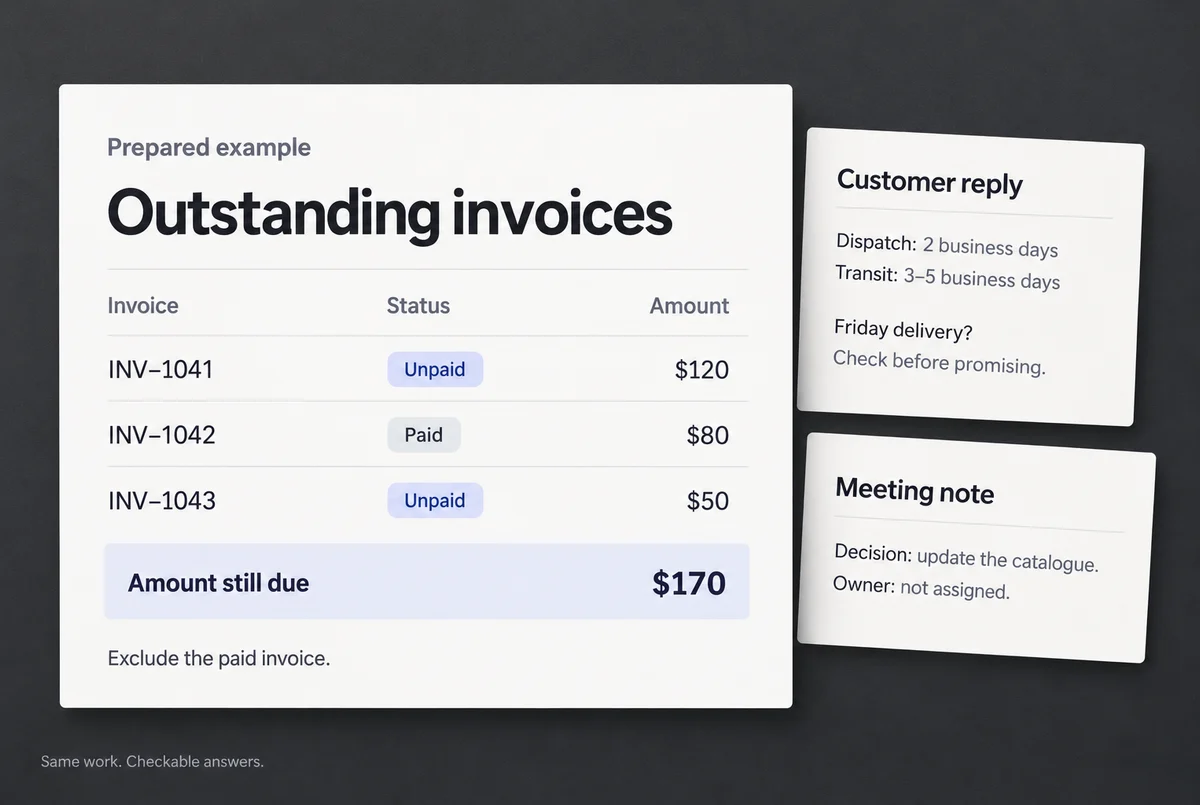
The store dispatches in two business days. Delivery usually takes another three to five. You don’t yet know the destination or when the customer plans to order.
A polished answer promising Friday would be easy to send. It would also be your problem when Friday arrives and the mug doesn’t.
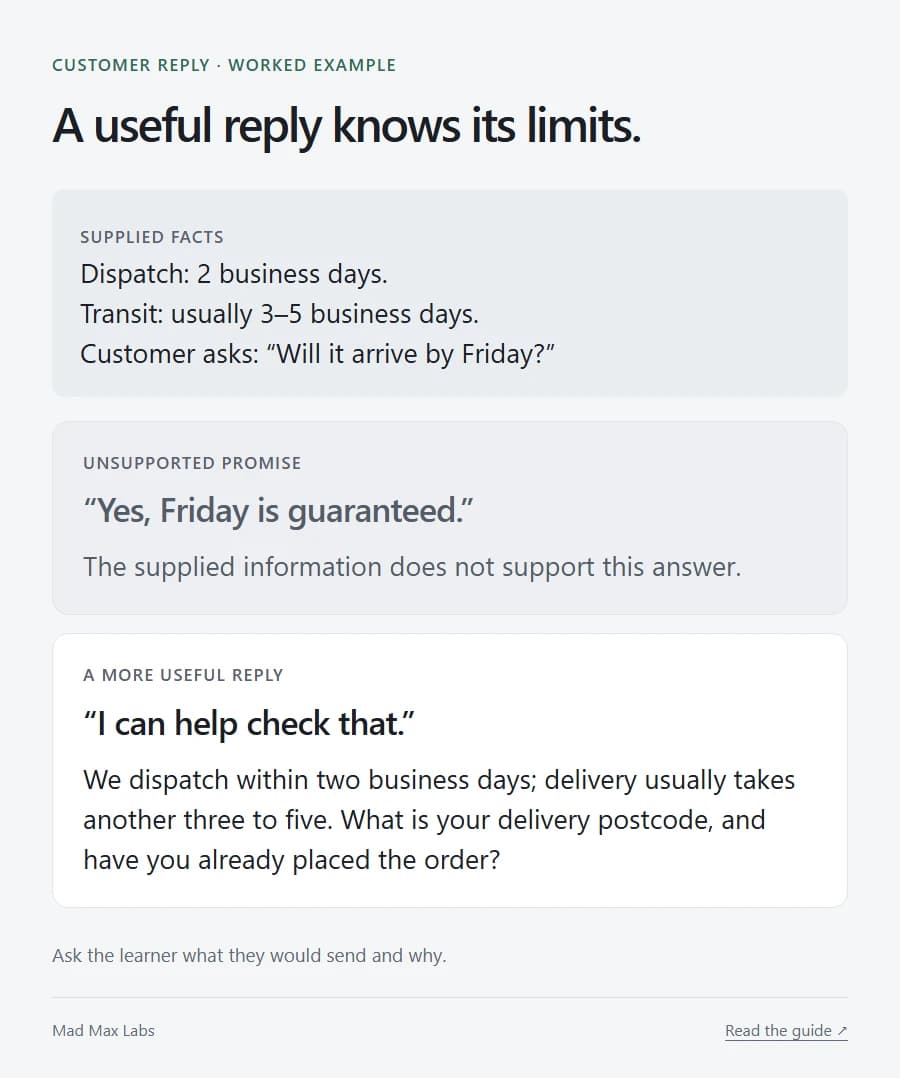
A useful reply explains the dispatch and delivery windows, then asks for the missing details. Nothing spectacular. Just a customer getting an answer the business can stand behind.
This is a better training exercise than watching an assistant produce a thousand words in ten seconds. Let the participant try it, inspect the result and explain what needs changing. The moment they catch the unsupported promise is the moment the session starts paying for itself.
Learn to recognise a good answer
Different work needs different judgement.
A quote comparison needs the right items, quantities and totals. A meeting brief needs the decisions, the people responsible and the questions left open. A customer reply needs to answer the question without making up a policy.
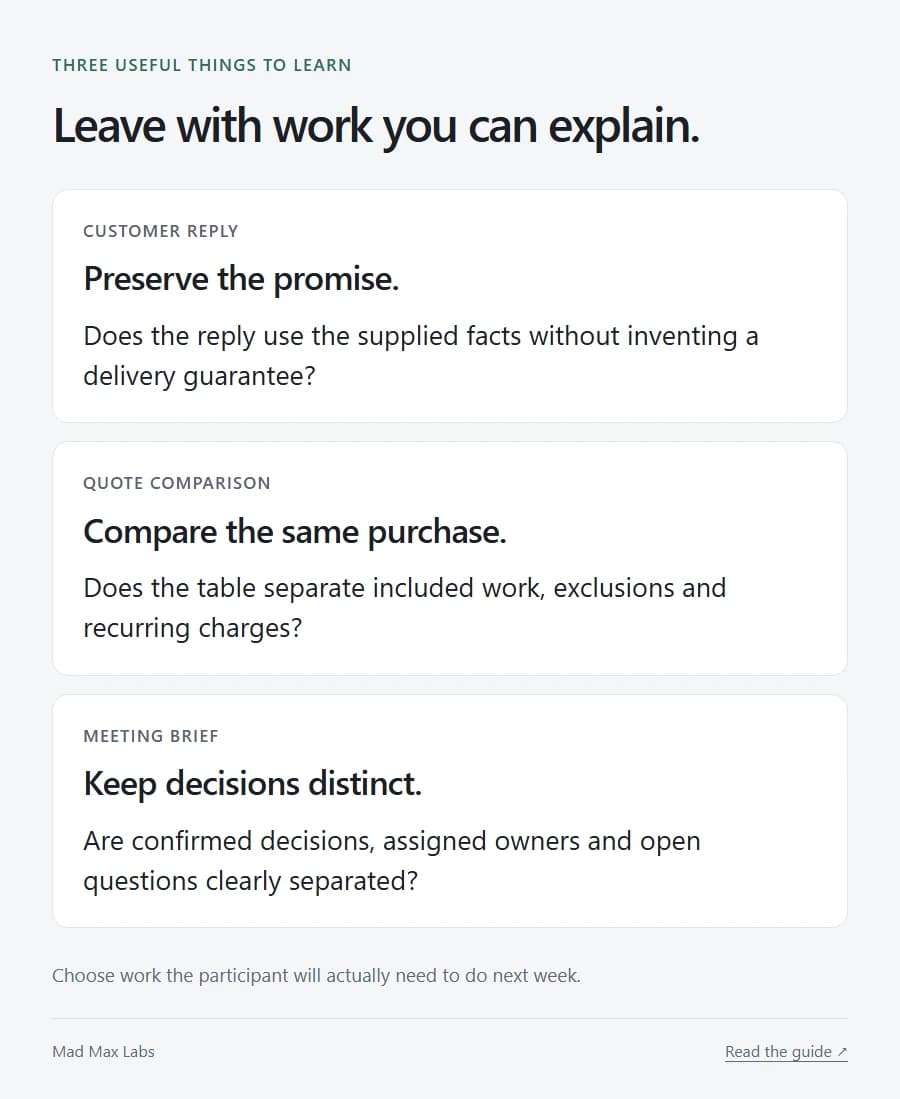
Give someone an imperfect result and let them repair it. A missing delivery condition teaches more than a flawless demo chosen because it always behaves.
For research, open the source. Does it actually say what the answer claims? For a spreadsheet, check which rows made it into the total. For writing, read the sentence as the customer would. Does it sound like someone who knows the business, or a committee welcoming you to an exciting journey?
Start with public information or sample records. You can learn all of this without handing over a customer database.
Make sure everyone gets a turn
Ten people watching one screen is a presentation. If you are buying practical training, leave enough time for people to practise.
A bookkeeper and a social editor might share an introduction, then need very different exercises. A solo owner might need help choosing an account and completing three recurring jobs. A team also needs to agree where approved work goes and who can send it.
Ask how the session will handle that mix. Ask what people need set up beforehand. Losing the first hour to account invitations is an expensive way to learn where the login button lives.
I would pay more attention to supervised practice and useful follow-up than to the length of the tool list. Nobody needs a guided tour of thirty apps they will forget by Thursday.
Write a better brief than “teach us AI”
Try this:
“We have two people answering delivery questions. They need to draft clear replies from our product and shipping information, spot promises we cannot make and finish without someone taking over.”
Now the trainer has something to prepare for. You have something to judge.
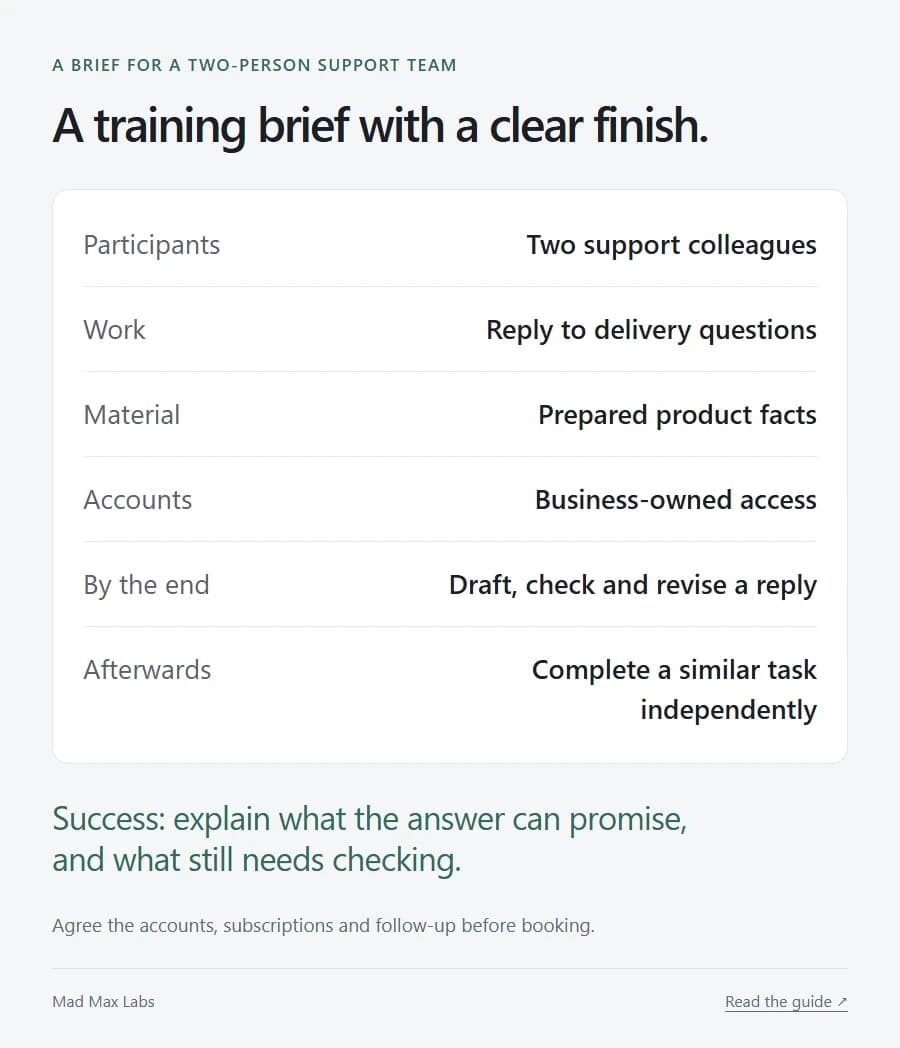
Include the accounts you already have, the material people can use and the work you want them to finish. Ask what you will keep afterwards: examples, notes, recordings if agreed, and any follow-up time.
Make sure the business controls the accounts and knows which features require a paid subscription. Training and a software licence are separate costs unless the proposal says otherwise.
If tool choice is still the sticking point, I’ve written about why I now favour ChatGPT after being a big Opus fan, alongside the reasons a team might choose Claude or Gemini.
Monday is the test
After the session, change one detail. Give the participant a different destination, two conflicting dates or an invoice marked paid. Let them finish the task on their own.
Ask what they checked. Ask what they would send and what they would hold back for a decision.
Count the time it takes to reach usable work, including the corrections. A fast draft that needs half an hour of repair has a rather limited claim to efficiency.
The best souvenir from AI training is opening the tool the next morning and knowing what to do.